Overall SDG Alignment Evaluation:
The Bachelor of Arts Program in Tourism Management (International Program) at Khon Kaen University is strategically designed to cultivate professionals who can lead the tourism industry towards a more sustainable and responsible future. The program's philosophy is rooted in creating a "green economy and society," managing natural and cultural resources effectively, and instilling a strong sense of social and environmental responsibility in its graduates. This vision aligns powerfully with the core principles of the UN Sustainable Development Goals. The curriculum is a direct contributor to SDG 8 (Decent Work and Economic Growth) by focusing on sustainable tourism practices that create jobs and promote local culture. It also strongly supports SDG 11 (Sustainable Cities and Communities) and SDG 12 (Responsible Consumption and Production) through dedicated courses on Sustainable Tourism Management, Community-based Tourism, and Cultural Heritage Tourism Management, which emphasize the preservation of heritage and the responsible use of resources. Furthermore, the program fosters a global perspective essential for SDG 17 (Partnerships for the Goals) by preparing students to work in a multicultural environment and understand regional dynamics, such as in ASEAN. By addressing cultural diversity and social inclusion, the curriculum aligns with SDG 10 (Reduced Inequalities). Through its focus on innovation, technology, and entrepreneurship, it also supports SDG 9 (Industry, Innovation, and Infrastructure). As a comprehensive higher education program that includes mandatory professional experience through cooperative education, it is a clear embodiment of SDG 4 (Quality Education), equipping graduates with the skills and ethical framework needed to build a resilient and sustainable global tourism sector.
Bachelor of Arts Program in Tourism Management (International Program) of Khon Kaen University (KKU) has driven the mission to cultivate "World-Responsible Tourism Reformers" who are professionally equipped to precisely cope with complex global challenges, particularly the rapid changes in the market and digital technology.
The core of the curriculum is the laying of the foundation for Outcome-Based Education (OBE), combined with a focus on creating real experience to enable students to intelligently integrate knowledge from core courses to solve problems in the tourism industry. Key core courses include Hotel Management, Sustainable Tourism Management (which is central to creating an eco-friendly business model), Tour Arranging and the Art of Guidebook Writing (which blends storytelling skills with tour management), and the course series Foreign Languages for the Tourism Industry, covering both English and Chinese, to serve as a gateway for communication in international forums.
This strategic focus has resulted in the evident outcome of producing graduates with international-level operational skills in the tourism industry and the ability to effectively work in a multicultural environment. These capabilities are key mechanisms that generate a sustainable impact on the country's service and tourism sector by elevating standards to be internationally recognized and creating a tourism model that truly considers environmental and social impact.
The curriculum activity is therefore clearly strategically aligned with the Sustainable Development Goals (SDGs), including SDG 8 (Decent Work and Economic Growth), SDG 12 (Responsible Consumption and Production), and SDG 17 (Partnerships for the Goals).
Best Practices
Food and Beverage Outing Project
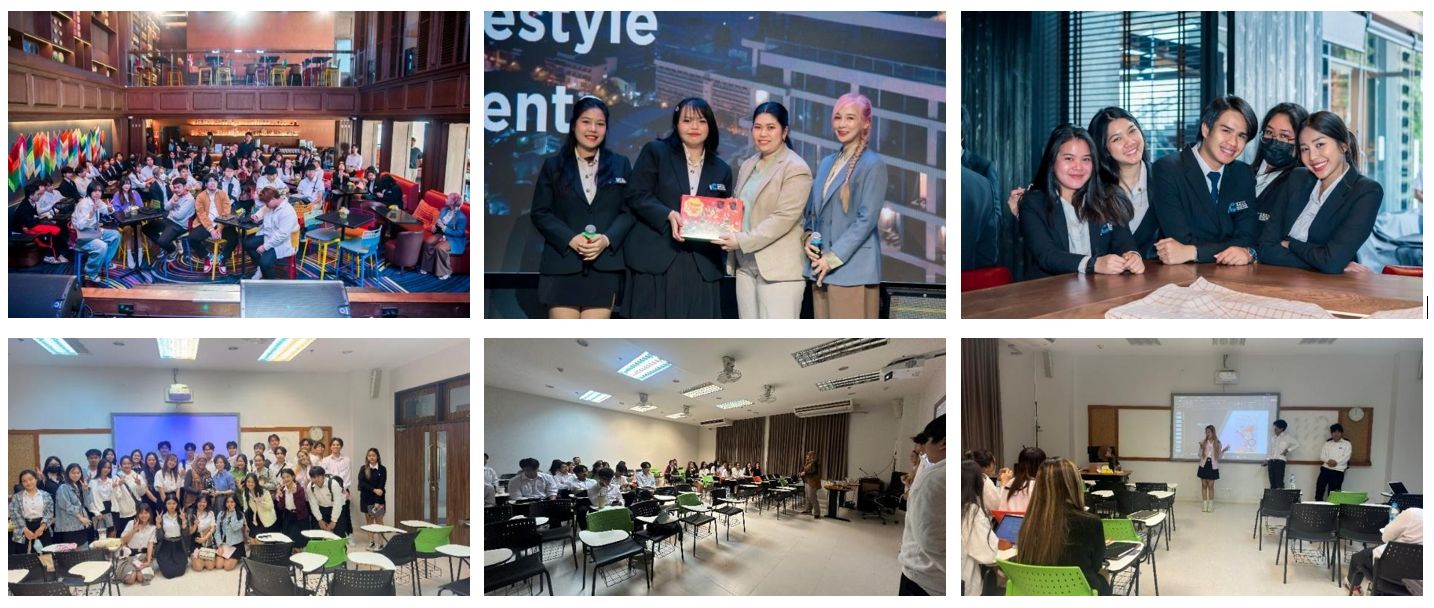
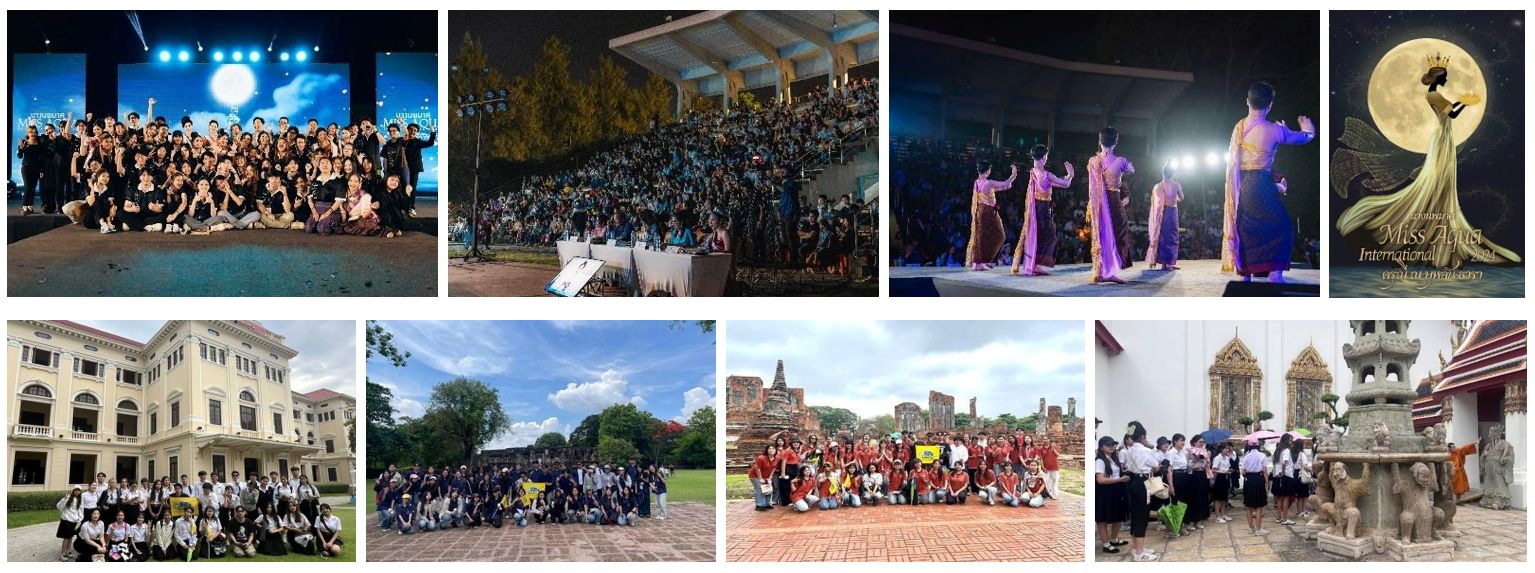
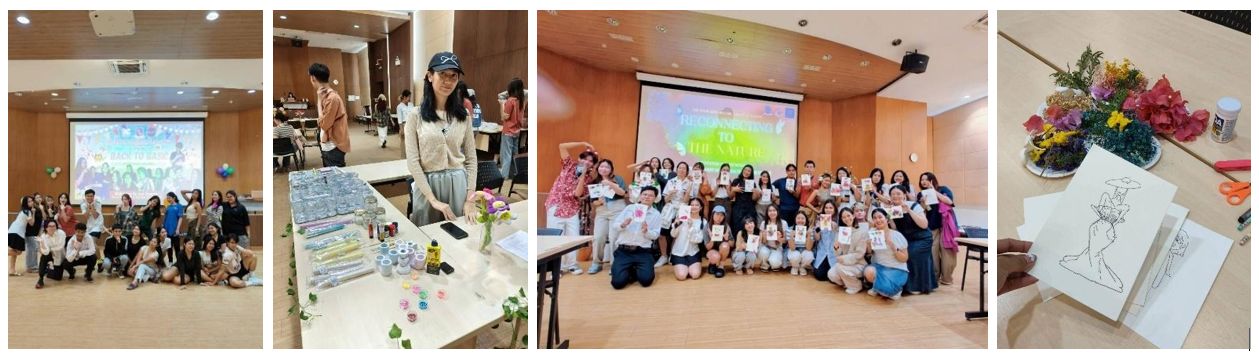
The Khon Kaen University’s Bachelor of Arts in Tourism Management (International Program), has developed a well-structured and continuous integrated teaching approach that effectively combines theoretical knowledge with practical experience. For example, the course 054 432 Bar and Restaurant Management and other related subjects. During the 2024-2025 academic year, many learning activities have been organized to foster graduates to become well’equipped with academic expertise, professional skills, and a strong sense of social and environmental responsibility. The operation activities are, the food and Beverage Outing Project (held on December 2, 2025, at Ad Lib Khon Kaen Hotel), which provide students with hands-on experience in managing food and beverage operations in a real business environment. The Guest Speaker initiative in the IC 214203 English for Current Issues in Tourism course (April 24, 2025, at the Science Museum), it’s about experts in language and tourism marketing sharing their real-world insights. The Seminar in Tourism Management Miss Aqua International (November 9 and 15, 2024, at the KKU Cultural and Art Center and Art Gallery), is about students creating projects related to tourism which promote the Loy Krathong cultural festival for the local community. The TM Domestic Field Trip (April 25 and May 9-11, 2025, traveling the Khon Kaen-Bangkok route via Nakhon Ratchasima and Ayutthaya), this provide students with first aid training and professional tour guide practice in real setting to prepare them for legal certification. And last but not least the Wellness Project (November 19-27, 2024, spending five days at the Joint Learning and Basic Skills Development Building), where students use their knowledge of health tourism and wellbeing to develop wellness plans within the university community.
These initiatives have led to the positive result such as students receive direct work experience in real business setting, foster their English communication skills in tourism field, learning from successful experts and entrepreneurs, enhance leadership and teamwork skills through organizing major events, gaining the important skills and knowledge needed to work effectively as a tour guide, and applying academic knowledge to generate valuable community and social contributions. The bigger positive impact includes establishing the quality of Tourism Management graduates, create them to be competitive in the national and international labor markets; fostering a sustainable tourism industry by developing skilled personnel with a sense of social and environmental; preserving and promoting local cultural heritage; developing wellness and quality of life for university and surrounding communities; and create networking partnerships among educational institutions, tourism businesses, and local communities to drive sustainable development of tourism in the Northeastern region.
The activities form previous clearly related and completely support multiple Sustainable Development Goals (SDGs). The three goals that have the most impact are: SDG 4: Quality Education, which is directly addressed by all the activities through delivery of inclusive, quality education and lifelong learning opportunities focusing on learning through hands-on experiences and guidance from specialists and necessary skills for 21st-century careers. This aligns with THE Impact Ranking indicators, such as "Pedagogical commitment", "Lifelong learning measure", and "First-generation students". SDG 8: Decent Work and Economic Growth. It is about preparing students with skills and knowledge which are related to industry, promoting quality employment and productivity, and encouraging sustainable economic growth through responsible tourism development. These reflect the indicators like "Employment practice", "Graduate employment rates", and "Work placements and apprenticeships". Last but not least, SDG 17: Partnerships for the Goals, it is display about active collaboration between Khon Kaen university, tourism industry as stakeholders (including Ad Lib Khon Kaen Hotel and various tourist destinations), marketing and tourism communication experts, and local communities to develop human resources and the tourism sector. This reflects with the indicators such as "Relationships to support the goals", "Cross-sector collaboration", and "Education for the SDGs".
Moreover, these initiatives also contribute to other SDGs including SDG 3: Good Health and Well-being, through the Wellness Project and first aid training; SDG 11: Sustainable Cities and Communities, by promoting sustainable tourism and cultural heritage conservation; SDG 12: Responsible Consumption and Production, about via education on sustainable food and beverage management; and SDG 16: Peace, Justice and Strong Institutions, which about fostering peaceful and inclusive communities through cultural activities.
Overall, Khon Kaen University's Tourism Management curriculum exemplifies the combined application of experiential learning with sustainable social, economic, and environmental impacts. It indicates the university's commitment to producing graduates who are knowledgeable, equipped with 21st-century skills, and aware of their responsibilities toward sustainable and socially accountable tourism development. Moreover, it highlights the importance of cross-sector partnerships to advance sustainable development locally, nationally, and globally.
 SDG 4: Quality Education
Alignment Summary: This program provides high-quality, specialized education in tourism management, equipping students with the vocational skills and lifelong learning capabilities necessary for a successful career. Through mandatory professional experience and research-focused courses, it ensures graduates are well-prepared for the industry.
| Course Code | Course Title | Alignment Rationale |
|---|---|---|
| IC 213 008 | Research Methodology for Tourism Studies | Directly supports quality education by equipping students with advanced technical and research skills relevant for employment and entrepreneurship in the tourism sector (Target 4.4). |
| IC 214 785 | Cooperative Education in Tourism Management | Ensures all students acquire technical and vocational skills through mandatory work placements, promoting skills for employment and lifelong learning opportunities (Target 4.3 & 4.4). |
 SDG 8: Decent Work and Economic Growth
Alignment Summary: The curriculum is centered on promoting sustainable tourism as a driver for inclusive economic growth and decent work. Courses focus on developing policies and practices that create jobs, promote local culture and products, and ensure the long-term economic viability of the tourism industry.
| Course Code | Course Title | Alignment Rationale |
|---|---|---|
| IC 212 005 | Sustainable Tourism Management | Directly aligns with the goal to devise and implement policies for sustainable tourism that creates jobs and promotes local culture and products (Target 8.9). |
| IC 214 102 | Small and Medium Entrepreneurs in Hospitality and Tourism Industry | Fosters entrepreneurship and the growth of small enterprises, which are critical for creating decent jobs and driving economic growth (Target 8.3). |
| IC 214 785 | Cooperative Education in Tourism Management | Provides students with significant work experience, supporting the achievement of full and productive employment and decent work for all graduates (Target 8.6). |
 SDG 9: Industry, Innovation and Infrastructure
Alignment Summary: The program supports innovation within the tourism industry by incorporating courses on technology, creative entrepreneurship, and innovative operational management. It prepares students to upgrade the technological capabilities of the sector and develop new, sustainable tourism products and services.
| Course Code | Course Title | Alignment Rationale |
|---|---|---|
| IC 212 006 | Information Communication Technology for Tourism | Enhances technological capabilities within the tourism industry by teaching the application of modern ICT, which fosters innovation (Target 9.5). |
| IC 213 006 | Innovative Tour Operation and Travel Agencies | Directly focuses on innovation within the tourism sector, supporting sustainable industrialization and the development of new services (Target 9.2). |
| IC 011 019 | Creative Entrepreneurship | Encourages the creation of small-scale enterprises within the tourism industry, promoting innovation and access to financial services (Target 9.3). |
 SDG 10: Reduced Inequalities
Alignment Summary: By focusing on cross-cultural communication, community-based tourism, and global citizenship, the program actively works to reduce inequalities. It equips students with the awareness and skills needed to create inclusive tourism experiences that respect and empower local and diverse communities.
| Course Code | Course Title | Alignment Rationale |
|---|---|---|
| IC 011 011 | Cultural Diversity | Fosters intercultural understanding and respect, which is fundamental to promoting the social and economic inclusion of all, irrespective of origin (Target 10.2). |
| IC 214 109 | Community-based Tourism | Empowers local communities by promoting their participation in and benefit from tourism, directly supporting social and economic inclusion (Target 10.2). |
 SDG 11: Sustainable Cities and Communities
Alignment Summary: The program makes a significant contribution to making cities and communities more sustainable by focusing on the protection and promotion of cultural and natural heritage. Courses on heritage tourism, community-based tourism, and destination planning teach students how to manage tourism in a way that safeguards local assets for future generations.
| Course Code | Course Title | Alignment Rationale |
|---|---|---|
| IC 214 111 | Cultural Heritage Tourism Management | Directly addresses efforts to protect and safeguard the world’s cultural and natural heritage through responsible tourism management (Target 11.4). |
| IC 011 013 | Local Wisdom and Communities | Focuses on preserving local culture and heritage, a key component of the 'Support of arts and heritage' metric for sustainable communities. |
| IC 213 007 | Tourism Destination Planning and Development | Teaches sustainable planning for tourism development, supporting links between urban, peri-urban and rural areas (Target 11.A). |
 SDG 12: Responsible Consumption and Production
Alignment Summary: This curriculum instills the principles of responsible consumption and production by teaching sustainable tourism management. It focuses on developing tourism that is environmentally friendly, respects local cultures, and benefits local communities, thereby encouraging tourism companies to adopt sustainable practices.
| Course Code | Course Title | Alignment Rationale |
|---|---|---|
| IC 212 005 | Sustainable Tourism Management | Directly supports the development of sustainable tourism practices and the implementation of tools to monitor their impacts, aligning with Target 12.B. |
| IC 214 109 | Community-based Tourism | Promotes sustainable production patterns by empowering local communities to manage tourism resources responsibly and sustainably (Target 12.2). |
 SDG 16: Peace, Justice and Strong Institutions
Alignment Summary: The program contributes to building strong institutions by educating future leaders in the tourism sector on professional ethics, laws, and regulations. This ensures that tourism development is managed transparently and accountably, respecting the rule of law and the rights of local communities.
| Course Code | Course Title | Alignment Rationale |
|---|---|---|
| IC 212 009 | Professional Ethics and Laws for Tourism | Promotes the rule of law by educating students on legal frameworks and ethical practices essential for building effective and accountable institutions in the tourism sector (Target 16.3 & 16.6). |
| IC 011 014 | Citizenship and Democratic Society | Fosters an understanding of responsive, inclusive, and participatory decision-making, which are key principles for strong institutions (Target 16.7). |
 SDG 17: Partnerships for the Goals
Alignment Summary: The curriculum fosters a deep understanding of regional and international cooperation in tourism. By studying the dynamics of tourism within ASEAN and the importance of cross-cultural communication, the program prepares graduates to build the multi-stakeholder partnerships necessary to achieve sustainable development in the industry.
| Course Code | Course Title | Alignment Rationale |
|---|---|---|
| IC 214 110 | ASEAN Studies for Tourism | Enhances the global partnership for sustainable development by focusing on regional cooperation and policy coherence within the ASEAN bloc (Target 17.14 & 17.16). |
| IC 212 002 | International Communication Arts for Tourism | Develops the cross-cultural communication skills essential for building and maintaining effective partnerships between public, public-private and civil society stakeholders (Target 17.17). |