Overall SDG Alignment Evaluation:
The Bachelor of Medical Technology program is intrinsically and profoundly aligned with the Sustainable Development Goals, with a primary and unwavering focus on human health and well-being. The curriculum is designed to produce highly competent healthcare professionals who form the backbone of modern diagnostic medicine, directly supporting the achievement of SDG 3 (Good Health and Well-being) through every facet of their training. From diagnosing infectious and non-communicable diseases to ensuring the safety of the blood supply and advancing molecular diagnostics, the program is a cornerstone of a resilient healthcare system. It champions SDG 4 (Quality Education) by providing rigorous scientific and practical training, and fosters innovation in healthcare infrastructure (SDG 9) through its emphasis on advanced laboratory instrumentation and quality management. Furthermore, the program instills principles of responsible laboratory practice, including the safe management of biohazardous waste, aligning with SDG 12 (Responsible Consumption and Production). By preparing skilled professionals for a critical sector, it contributes to SDG 8 (Decent Work and Economic Growth) and builds vital partnerships between academia and healthcare providers (SDG 17).
The Bachelor of Science Program in Medical Technology, Khon Kaen University, advances its core mission to elevate the quality of healthcare services and medical research in the region. The program responds to the challenges of infectious disease control and non-communicable diseases (NCDs), which require precise laboratory diagnostics that meet international standards. The curriculum emphasizes the integration of health science knowledge with intensive advanced medical technology practice, through essential professional foundation courses such as Law and Ethics for Medical Technology, which foster graduates' responsibility and adherence to standards, as well as Immunology Diagnostics, Medical Microbiology, Hematology, and Clinical Biochemistry. All these subjects are incorporated into clinical laboratory training, enabling students to become experts in laboratory analysis and quality assurance.
This approach has resulted in tangible outcomes, including the production of graduates who are proficient in using modern laboratory technology and capable of establishing accurate and rapid diagnostic standards. These graduates play a vital role in supporting hospitals and public health agencies across the Northeastern network. The program's sustainable impact is seen in the enhancement of public health security for the broader population, particularly in controlling disease outbreaks and reducing diagnostic errors within the healthcare system.
Strategically, this program is strongly aligned with the Sustainable Development Goals (SDGs): driving SDG 3 (Good Health and Well-being) by ensuring access to high-quality health services through accurate diagnostics; SDG 9 (Industry, Innovation and Infrastructure) by promoting research and the application of laboratory innovation and technology to strengthen public health infrastructure; and SDG 4 (Quality Education) by producing highly qualified medical technology professionals who meet the real needs of the national healthcare system.
Best Practices
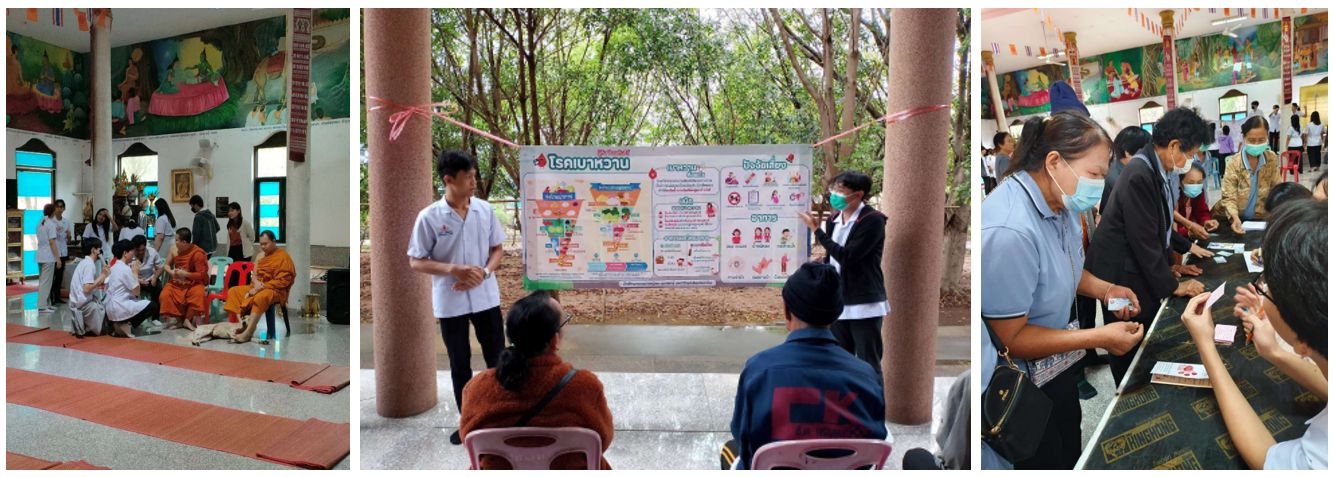
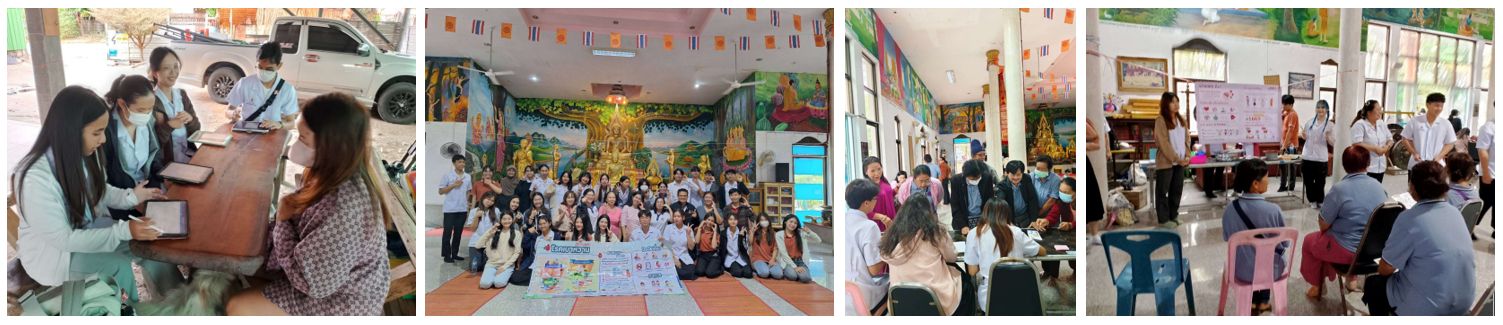
Community Academic Service and Field Study for the Community Medical Technology Course
As a leading higher education institution in the Northeastern region, Khon Kaen University understands the critical role of producing medical personnel who not only have technical skills but also deeply care about community service for sustainable development. That's why the Bachelor of Science in Medical Technology (Revised Curriculum 2020) includes the course "Community Medical Technology" which focuses on experiential learning closely tied to real-life community situations.
In the 2024 academic year, a systematic academic service and field study project was implemented. This initiative offer hands-on experience at various Subdistrict Health Promoting Hospitals (SHPHs) - specifically in Sila and Phra Lap, as well as Nam Phong Hospital, Ubolratana Hospital, and the Ban Tao Nor Community in Sila Subdistrict, Mueang District, Khon Kaen Province - from January to March 2025. During this time, students will work side by side with SHPH staff and 20 Village Health Volunteers (VHVs) to provide a broad range of public health services, including health promotion, disease prevention, medical care, rehabilitation, and consumer protection, which are essential parts of primary health care system guided by the Ministry of Public Health.
The Hands-on experience will enable students to interact directly with the community, helping them understand the role of medical technologists within the community health system. They'll also improve their communication and teamwork skills while working with health experts and the public. At the same time, the Ban Tao Nor community and other target areas will benefit from health screenings and medical advice offered by both students and expert faculty, ultimately fostering greater health awareness and disease prevention practices.
This project has a broader goal: to help build a strong and sustainable community health system. By producing medical personnel dedicated to community service, it can enhance the knowledge and skills of VHVs and local health networks, thereby reducing health service access inequalities for those residing in more remote areas.
This work aligns with three key Sustainable Development Goals (SDGs). It directly supports SDG 3: Good Health and Well-being by prioritising health promotion, disease prevention, and the delivery of quality health services. This is achieved by training qualified medical staff and empowering the primary healthcare system. It also contributes to SDG 4: Quality Education by providing students with real-world experiences that help them learn, encouraging them to develop professional skills and social responsibility, and sharing valuable health information with the community, consistent with the "Pedagogical commitment" and "Lifelong learning measures" indicators. It also supports SDG 17: Partnerships for the Goals by bringing together Khon Kaen University, Subdistrict Health Promoting Hospital, community hospitals, VHV/ networks, and local communities to work together on integrated and sustainable health development, in line with the "Relationships to support the goals" indicator.
This project demonstrates how Khon Kaen University integrates teaching, academic service, and community development to create positive change in public health and quality of life, foster a new generation of medical professionals, and establish partnerships for sustainable regional development.

Physical Therapy Services at the Khon Kaen International Marathon 2025 (KKIM2025)
Khon Kaen University, a leading educational institute dedicated to making a positive impact in society and promoting sustainable development, has taken a meaningful step by merging its education mission with community service. This is exemplified through its involvement in international sporting events like the Khon Kaen International Marathon 2025 (KKIM2025), set to take place on January 11-12, 2025, at the Kanchanphisek Multipurpose Convention Center, Khon Kaen University. To support this event, the Faculty of Associated Medical Sciences has established a medical service unit focused on helping runners and participants with physical therapy, muscle stretching, and cold water foot immersion.
A dedicated team of 101 skilled professionals and students who rallied together to provide care, including 16 faculty members from the Department of Physical Therapy, 4 graduate physical therapy students, 74 undergraduate physical therapy students in their second and third years, and 7 physical therapists and staff from the Faculty of Associated Medical Sciences. Together, they've had the opportunity to serve over 2,000 participants over the course of the two-day marathon.
For the students, this experience is invaluable. They gain hands-on experience delivering medical services in a real-world environment setting with a large and diverse client base, which allows them to develop their skills in symptom assessment, providing advice, and patient care under the supervision of expert faculty. For the marathon runners, both local and from abroad, the quality medical services offered help reduce the risks of injury, speed up recovery, and support their overall well-being.
The broader impact of this initiative goes beyond individual care. It sets a higher standard for international sporting events in the region by creating a more comprehensive and effective healthcare system. It enhances Khon Kaen University's reputation as an institution that places a strong emphasis on public health and safety, encourages a culture of fitness and health care with the community, and builds strong collaborative networks among educational institutions, sports organizations, and local communities-ultimately contributing to a better quality of life for everyone.
This initiative aligns with three important Sustainable Development Goals (SDGs). It supports SDG 3: Good health and Well-being by promoting health and preventing exercise-related injuries through quality physical therapy services to over 2,000 runners and the general public, consistent with the "Health Service outreach" and "Health promotion activities" indicators in THE Impact Rankings, which emphasize broad community health services and promotion of healthy lifestyles. It supports SDG 4: Quality Education through integrated teaching that enables physical therapy students at both undergraduate and graduate levels to learn from practical, challenging situations, developing professional skills, clinical expertise, and a sense of social responsibility, aligned with "Pedagogical commitment" and "First-generation students" indicators that focus on quality education and inclusive opportunities for the student development. Furthermore, it advances SDG 17: Partnerships for the Goals by fostering collaboration among Khon Kaen University, the marathon organizing committee, public health agencies, and local communities to drive integrated health and sports promotion, including knowledge and experience exchange among medical personnel, students, and participants from multiple countries, consistent with the "Relationships to support the goals" and "Publication of SDG reports" indicators.
This project illustrates how Khon Kaen University integrated education, research, and community service, creating a ripple effect that improves public health and enhances quality of life. It develops a new generation of committed medical professionals while strengthening multi-sectoral partnerships that promote sustainable development at local, national, and international levels.

 SDG 3: Good Health and Well-being
Alignment Summary: This program is the embodiment of SDG 3. Its entire curriculum is dedicated to diagnosing, monitoring, and preventing disease. Every core course, from clinical microbiology and immunology to hematology and clinical chemistry, provides the essential laboratory data that clinicians rely on to ensure healthy lives and promote well-being for all ages.
| Course Code | Course Title | Alignment Rationale |
|---|---|---|
| MT313301 | Clinical Microbiology I (Bacteriology) | Directly contributes to fighting communicable diseases by teaching the identification of pathogenic bacteria, which is essential for diagnosing infections and guiding treatment (Target 3.3). |
| MT313302 | Clinical Immunology and Serology | Supports the prevention and treatment of diseases by focusing on the diagnosis of immune system disorders and infectious diseases through serological testing (Target 3.3). |
| MT313401 | Hematology | Is fundamental to diagnosing a wide range of health conditions, including anemia, leukemia, and bleeding disorders, thereby promoting good health and well-being (Target 3.4). |
| MT313501 | Clinical Chemistry | Supports the management of non-communicable diseases by teaching the analysis of chemical markers in the body to diagnose and monitor conditions like diabetes and heart disease (Target 3.4). |
| MT313601 | Immunohematology and Blood Banking | Ensures universal access to safe blood transfusions, a critical component of healthcare services, by teaching blood typing, crossmatching, and blood component preparation (Target 3.8). |
 SDG 4: Quality Education
Alignment Summary: The program provides high-quality, specialized education in medical science, equipping students with the complex technical skills and deep knowledge required for a career in medical technology. Through rigorous coursework, laboratory practice, and extensive professional training, it ensures graduates are competent, skilled professionals capable of lifelong learning.
| Course Code | Course Title | Alignment Rationale |
|---|---|---|
| MT314801 | Seminar in Medical Technology | Supports quality education by developing skills in research, critical analysis, and scientific communication, preparing students for professional advancement (Target 4.4). |
| MT314802 | Research in Medical Technology | Enhances education for sustainable development by training students in scientific research methodology, enabling them to contribute new knowledge to the healthcare field (Target 4.7). |
| MT314901 | Professional Practice in Medical Technology 1 | Provides inclusive and equitable quality education through extensive, supervised practical training in real hospital laboratories, ensuring students acquire the necessary vocational skills for employment (Target 4.4). |
 SDG 8: Decent Work and Economic Growth
Alignment Summary: The program contributes to economic growth by producing highly skilled graduates for the essential healthcare sector. It promotes decent work by instilling principles of professional ethics, safety, and quality management, preparing graduates for productive and safe employment.
| Course Code | Course Title | Alignment Rationale |
|---|---|---|
| MT314702 | Laws and Ethics for Health Professionals | Promotes decent work by ensuring graduates understand the legal and ethical responsibilities of their profession, which is fundamental to a safe and respectful work environment (Target 8.8). |
| MT314701 | Laboratory Management | Supports higher levels of economic productivity by teaching efficient management of laboratory resources, personnel, and finances, contributing to the sustainability of healthcare services (Target 8.2). |
 SDG 9: Industry, Innovation and Infrastructure
Alignment Summary: This program supports the development of resilient healthcare infrastructure and fosters innovation. Graduates are trained to operate and maintain sophisticated laboratory instrumentation and to implement quality control systems, which are critical components of modern healthcare infrastructure and drive diagnostic innovation.
| Course Code | Course Title | Alignment Rationale |
|---|---|---|
| MT312201 | Medical Instrumentation | Directly supports the development of reliable and resilient healthcare infrastructure by providing the knowledge to operate, maintain, and troubleshoot essential medical laboratory equipment (Target 9.1). |
| MT314802 | Research in Medical Technology | Enhances scientific research and upgrades the technological capabilities of the healthcare sector by training students to develop and validate new diagnostic methods and technologies (Target 9.5). |
| MT313702 | Molecular Technique in Medical Technology | Fosters innovation by teaching cutting-edge molecular diagnostic techniques that are transforming the diagnosis of genetic and infectious diseases, upgrading the technological capacity of laboratories (Target 9.5). |
 SDG 12: Responsible Consumption and Production
Alignment Summary: The program promotes responsible production patterns by teaching the principles of laboratory safety and management. This includes the efficient use of chemical reagents and the environmentally sound management of biohazardous and chemical waste generated in medical laboratories.
| Course Code | Course Title | Alignment Rationale |
|---|---|---|
| MT312102 | Biosafety and First Aids | Promotes the environmentally sound management of hazardous materials by teaching the principles of handling biological specimens and chemical waste safely to prevent environmental contamination (Target 12.4). |
| MT314701 | Laboratory Management | Contributes to the sustainable management and efficient use of resources by teaching inventory control and proper use of laboratory reagents and consumables, thereby reducing waste (Target 12.2). |
 SDG 17: Partnerships for the Goals
Alignment Summary: The program is built on a foundation of strong partnerships between the university and healthcare institutions. The extensive professional practice component is a direct, multi-stakeholder partnership that is essential for technology transfer, knowledge sharing, and building capacity in the healthcare system to achieve all other SDGs.
| Course Code | Course Title | Alignment Rationale |
|---|---|---|
| MT314901 | Professional Practice in Medical Technology 1 | Represents a direct and effective public-private or public-public partnership, building collaborative experience between academia and healthcare providers to achieve health goals (Target 17.17). |
| MT314902 | Professional Practice in Medical Technology 2 | Strengthens partnerships by immersing students in diverse healthcare settings, enhancing the capacity of the national health system through a well-trained workforce (Target 17.9). |