Overall SDG Alignment Evaluation:
The Bachelor of Science in Agriculture program is intrinsically designed to address the multifaceted challenges of sustainable development. The curriculum's philosophy is rooted in producing graduates who are not only knowledgeable in modern agricultural sciences but also possess an entrepreneurial mindset, teamwork skills, and the ability to adapt to a changing global context. This holistic approach ensures a strong alignment with multiple SDGs. The program directly tackles food security and sustainable farming practices (SDG 2), responsible management of natural resources like soil, water, and biodiversity (SDG 6, SDG 14, SDG 15), and promotes climate-resilient agriculture (SDG 13). Furthermore, by emphasizing modern agricultural business, technology, and innovation (SDG 8, SDG 9), and focusing on knowledge transfer and community development (SDG 1, SDG 4, SDG 17), the curriculum prepares graduates to be key agents in creating a sustainable, food-secure, and economically vibrant future for communities in Thailand and beyond.
Khon Kaen University has taken the lead in enhancing the agricultural sector's sustainability through its Bachelor of Science Program in Agriculture (Revised Curriculum, 2022). This curriculum is tailored to address global challenges, including climate change, food security, and the transition to a Bio-Circular-Green (BCG) Economy. The program is designed around the principles of Outcome-Based Education (OBE), which means it focuses on developing graduates as agricultural entrepreneurs in the modern world who can utilise technology and adapt to change. It intensively combines the importance of 21st-century knowledge and skills.
The curriculum combines technology-focused courses—such as Geoinformatics, Experimental Planning and Agricultural Data Management, and Environmental Science Fundamentals, with professional subjects and Capstone projects that emphasise modern entrepreneurship in agribusiness. These elements enable students to be able to plan and manage modern farms systematically, taking into account both environmental and social impacts.
The program produces graduates who can add value to the agriculture sector, reduce post-harvest losses, and use innovation in high-value economic agriculture. The result could lead to a positive impact on farmers’ quality of life and sustainable food security for the nation. Therefore, the activities in this curriculum clearly match with the Sustainable Development Goals (SDGs), which are SDG 4: Quality Education (by developing future-oriented learning systems and analytical thinking skills), SDG 8: Decent Work and Economic Growth (by preparing graduates to become high-value agricultural entrepreneurs), and SDG 2: Zero Hungry (by focusing on efficiency and managing the food production chain sustainably and with quality).
Best Practices
As a leading institution in agricultural science in the Northeastern region, Khon Kaen University recognises the importance of developing agrarian scholars who possess strong academic knowledge and practical skills, as well as a commitment to sustainable agricultural development. Therefore, the Faculty of Agriculture has developed a curriculum that systematically integrates hands-on learning with academic theory in Bachelor of Science in Agriculture, particularly in AG 103 004 Ecology of Insects and Integrated Field Crop Production courses. These courses have offered learning activities that created meaningful impacts in multiple dimensions of sustainable development.
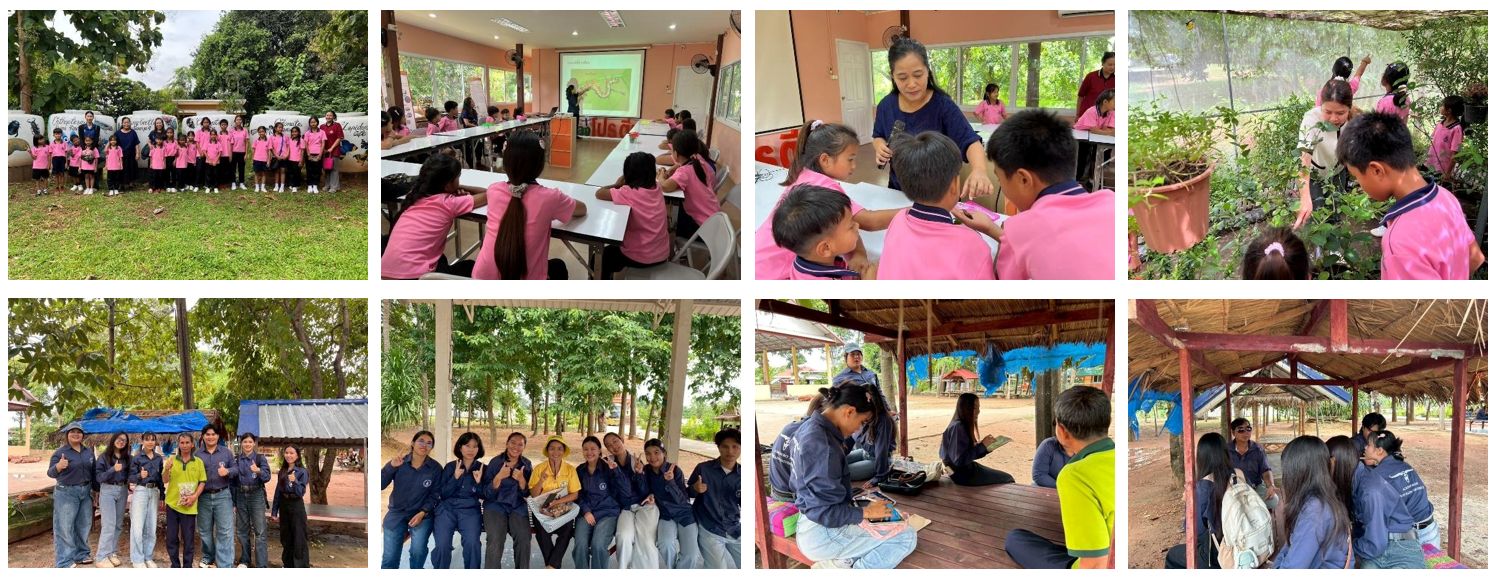
In August 2025, the Faculty organised two key projects that closely connected teaching with community service and development. The first event was a field study on fisheries and the insect industry,which took place on 22 August 2025, at the Insect Industry Division, Faculty of Agriculture, Khon Kaen University. This event provides the opportunity for 28 students and teachers from Ban Na Lom School, Phra Yuen District, Khon Kaen Province, to explore topics such as “Larvae, Insects, and Butterflies." The Manager of the Insect Industry Division, Dr Chutinan Chusai led educational sessions covering insect ecology, the role of insects within agricultural ecosystems, and the promising economic potential of the insect industry. A colouring activity was also organized to foster students' understanding and imagination about biology. The objective of these activities was to equip students with knowledge and experiences they can apply in their learning and everyday lives.
The second project was conducted on 18 August 2025. It involved 50 fourth-year undergraduate students who participated in an in-depth analysis of a specific area and worked on a cropping system exercise as part of their Integrated Field Crop Production course. The student conducted field research in Ban Hin Lat, located in the Ban Kho Subdistrict of Mueang Khon Kaen District. They analysed the agricultural land, interviewed local farmers, studied the requirements for different crops, and identified the factors that help or hinder successful economic crop production. This hands-on experience helped students sharpen their skills as agricultural professionals, enhancing their abilities in data analysis, communication, and providing practical advice to farmers.
The tangible results of these initiatives include inspiring secondary students from Ban Na Lom to gain a deeper understanding of agricultural and biological sciences. The students are developing a greater awareness of the ecological roles that insects play, along with an appreciation for the insect industry as a viable source of income and employment opportunities. At the same time, undergraduate students improved their ability to conduct systematic analyses of agricultural land. They gained valuable insights into the actual needs and challenges faced by farmers, while also enhancing their communication and teamwork skills. As a result, they were able to confidently propose development strategies for field crop production that are specifically tailored to the local context. Local farmers in Ban Hin Lat gained significant benefits from academic guidance and knowledge exchange with experts. They received practical information that is valuable in supporting their agricultural development efforts.
On a large scale, these projects established an essential partnership among Khon Kaen University, schools in remote areas, and the local farming community to promote sustainable agricultural development. They also support fundamental science and technology education to develop agricultural graduates who excel in their studies and are enthusiastic about serving their community. This enables the organised sharing of knowledge and technology with farmers and encourages eco-friendly farming practices by providing a more in depth understanding of insect ecology and sustainable resource management.
These two projects are clearly aligned with three primary Sustainable Development Goals (SDGs). Firstly, SDG 4: Quality Education. This goal provides high-quality education and lifelong learning opportunities to secondary school students, university students, and community farmers through practical learning experiences, the sharing of expert knowledge, and fostering exchanges between institutions and communities. This also impacts THE Impact Rankings Indicator, which includes “Pedagogical commitment,” “Lifelong learning measures,” and “Outreach and education programmes.” These are the things that highlight quality education and foster access to educational opportunities. Secondly, SDG 2: Zero Hunger focuses on enhancing knowledge and skills in integrated field crop production, which includes analysing detailed area and cropping systems, as well as sharing knowledge about the role of insect ecology in food production. Additionally, leveraging the insect industry as an alternative protein source is crucial for food security, sustaining agricultural productivity, and improving nutrition. This goal aligns with several indicators, including “Research on hunger,” “Student hunger,” and “Sustainable food systems.” Finally, SDG 17: Partnerships for the Goals focuses on building collaboration among Khon Kaen University, Ban Na Lom School, and Ban Hin Lat farming communities. The objective of this joint is to share knowledge, exchange experiences, and collectively promote sustainable agriculture. The indicator alignments are “Relationship to support the goals,” “Education for the SDGs,” and “Cross-sector collaboration,” highlighting the importance of partnership and education for sustainable development.
Additionally, the activities above also align with SDG 15: Life on Land, as they raise awareness about insect biodiversity, highlight their ecological roles, and promote sustainable management of natural resources.
The Bachelor of Science in Agriculture program at Khon Kaen University is a unique mix of teaching, research, and service to the community. What really sets it apart is its focus on making a real impact in sustainable agriculture, food security, and the well-being of farmers in Northeastern Thailand. The program is committed to equipping students with solid knowledge and practical skills, while also instilling a strong dedication to social and environmental sustainability. By fostering partnerships with local communities and educational institutions, Khon Kaen University is actively working to drive sustainable development both locally and regionally.
 SDG 1: No Poverty
Alignment Summary: This program contributes to alleviating poverty by empowering students and communities with the knowledge and skills for sustainable and profitable agriculture. Courses in agricultural extension and farming systems are designed to improve the livelihoods of small-scale farmers, thereby directly addressing rural poverty.
| Course Code | Course Title | Alignment Rationale |
|---|---|---|
| AG 143 401 | Farming Systems | Aligns with poverty reduction by teaching students to analyze and develop farming systems that improve the economic viability and resilience of smallholder farmers (Target 1.4). |
| AG 163 102 | Socio-economic Development in Agriculture | Directly addresses the economic dimensions of poverty by examining policies and development approaches aimed at improving the economic and social conditions in the agricultural sector (Target 1.B). |
 SDG 2: Zero Hunger
Alignment Summary: The core of this program is dedicated to ending hunger by advancing knowledge in sustainable food production systems. Courses across all majors—from crop science and animal science to soil fertility and pest management—aim to increase agricultural productivity, improve food quality, and ensure the resilience of food production systems.
| Course Code | Course Title | Alignment Rationale |
|---|---|---|
| AG 143 201 | Economic Field Crop Production | Directly supports sustainable food production by teaching methods to increase the productivity of staple food crops, contributing to food security (Target 2.3 & 2.4). |
| AG 133 101 | Economic Vegetable Production | Addresses the need for improved nutrition (Target 2.2) by focusing on the efficient and sustainable production of vegetables, a key component of a healthy diet. |
| AG 001 205 | Principle of Livestock and Aquatic Animal Production | Contributes to ending hunger by teaching principles of sustainable animal and aquaculture production, increasing the availability of protein sources (Target 2.1). |
| AG 123 351 | Soil Fertility and Plant Nutrition | Aligns with sustainable agriculture (Target 2.4) by focusing on managing soil health and plant nutrients, which is fundamental to maintaining and increasing crop yields. |
| AG 113 301 | Plant Disease Control | Supports the goal of ending hunger by equipping students with skills to prevent crop losses due to diseases, thereby securing the food supply (Target 2.1). |
 SDG 3: Good Health and Well-being
Alignment Summary: The program contributes to good health by focusing on the production of safe, nutritious food and promoting well-being through creative agricultural practices. Courses address issues like agricultural chemicals, food safety, and the development of agriculture for health and wellness.
| Course Code | Course Title | Alignment Rationale |
|---|---|---|
| AG 001 005 | Creative Agriculture for Well Being | Directly promotes well-being through the concept of agriculture for health, sustainable environments, and ecotourism, contributing to healthy lives (Target 3.4). |
| AG 103 006 | Insecticides and Application | Supports good health by teaching the safe and proper use of insecticides, reducing the risk of human exposure to harmful chemicals from food production (Target 3.9). |
| AG 113 302 | Agricultural Chemical for Plant Disease Control | Aligns with Target 3.9 by educating on the responsible use of agricultural chemicals to control plant diseases, minimizing chemical hazards in the food chain and environment. |
 SDG 4: Quality Education
Alignment Summary: This program embodies quality education by providing comprehensive and modern agricultural knowledge. It equips students with the technical and vocational skills needed for sustainable development, while the agricultural extension major specifically focuses on providing lifelong learning opportunities for farming communities.
| Course Code | Course Title | Alignment Rationale |
|---|---|---|
| AG 163 101 | Agricultural Extension Methods | Directly supports lifelong learning opportunities (Target 4.3) by teaching methods to effectively educate farmers and rural communities on new agricultural practices. |
| AG 003 301 | Basic Statistics for Agricultural Research | Provides students with technical and vocational skills, including research capabilities, that are relevant for employment and sustainable development (Target 4.4). |
| AG 004 785 | Cooperative Education in Agriculture | Enhances quality education by providing students with practical, on-the-job experience, significantly increasing their skills for employment (Target 4.4). |
 SDG 6: Clean Water and Sanitation
Alignment Summary: The curriculum integrates principles of sustainable water use and management. Courses on irrigation, soil and water conservation, and watershed management directly address the need for water-use efficiency and the protection of water-related ecosystems in an agricultural context.
| Course Code | Course Title | Alignment Rationale |
|---|---|---|
| AG 002 001 | Basic in Farm Mechanics and Irrigation Systems | Contributes to water-use efficiency (Target 6.4) by teaching the fundamentals of irrigation systems, which are crucial for sustainable water management in agriculture. |
| AG 124 445 | Soil and Water Management and Conservation | Directly addresses the protection of water-related ecosystems by teaching methods to conserve soil and water resources, reducing agricultural runoff and pollution (Target 6.6). |
| AG 123 314 | Watershed Management | Aligns with Target 6.5 by focusing on the integrated management of water resources at a watershed level, involving the protection and restoration of ecosystems. |
 SDG 8: Decent Work and Economic Growth
Alignment Summary: The program is designed to foster economic growth in the agricultural sector by preparing graduates to be entrepreneurs and skilled professionals. Courses on modern agribusiness, entrepreneurship, and agricultural economics equip students to create decent work and contribute to a productive and sustainable economy.
| Course Code | Course Title | Alignment Rationale |
|---|---|---|
| AG 153 001 | Modern Entrepreneurship in Agribusiness | Directly supports economic growth and decent work by equipping students with the skills to start and manage modern agricultural businesses (Target 8.2 & 8.3). |
| GE 363 789 | Creative Entrepreneurs | Promotes productive employment and decent work (Target 8.5) by fostering an entrepreneurial mindset and creativity applicable to the agricultural sector. |
| AG 163 402 | Agricultural Community Entrepreneur | Contributes to local economic growth by teaching students how to develop and support entrepreneurial activities within rural communities (Target 8.3). |
 SDG 9: Industry, Innovation and Infrastructure
Alignment Summary: This program is a hub for agricultural innovation, teaching students to apply modern science and technology to upgrade the agricultural industry. Courses in precision agriculture, biotechnology, and agricultural mechanics drive the technological advancement necessary for sustainable and resilient infrastructure.
| Course Code | Course Title | Alignment Rationale |
|---|---|---|
| AG 002 002 | Precision Agriculture | Fosters innovation (Target 9.5) by teaching the application of modern technologies like remote sensing, GIS, and IoT to make agriculture more efficient and sustainable. |
| AG 003 303 | Agricultural Genetics and Biotechnology | Enhances scientific research and upgrades technological capabilities (Target 9.5) by applying genetic and biotechnological tools to improve crop and animal production. |
| GE 341 512 | ABCD for All Professions | Promotes innovation by introducing students to key digital technologies like AI and cloud computing, which are increasingly crucial for modernizing the agricultural industry (Target 9.b). |
 SDG 11: Sustainable Cities and Communities
Alignment Summary: The program contributes to creating sustainable communities by addressing the link between agriculture, environment, and society. Courses on community development, environmental science, and landscape gardening help build resilient and sustainable rural and urban communities.
| Course Code | Course Title | Alignment Rationale |
|---|---|---|
| AG 163 301 | Community Analysis for Agricultural Development | Supports the development of inclusive and sustainable communities by teaching participatory methods to identify and address local agricultural and community needs (Target 11.A). |
| AG 123 202 | Fundamentals of Environmental Science | Contributes to sustainable communities by providing foundational knowledge on environmental issues, pollution, and resource management, essential for sustainable planning (Target 11.6). |
| AG 133 302 | Landscape Gardening and Turf Grass Management | Aligns with providing access to safe and inclusive green public spaces (Target 11.7) by teaching the principles of designing and maintaining gardens and green areas. |
 SDG 12: Responsible Consumption and Production
Alignment Summary: This curriculum strongly promotes sustainable consumption and production patterns. It focuses on achieving the sustainable management and efficient use of natural resources, reducing food losses, and managing agricultural chemicals and wastes in an environmentally sound manner.
| Course Code | Course Title | Alignment Rationale |
|---|---|---|
| AG 164 602 | Sustainable Agriculture | Directly promotes sustainable production patterns by teaching holistic agricultural systems that are environmentally sound and resource-efficient (Target 12.2). |
| AG 124 419 | Solid Waste and Hazardous Waste Management | Addresses the environmentally sound management of wastes (Target 12.4 & 12.5) by teaching principles of waste control and management relevant to agricultural production. |
| AG 134 402 | Postharvest Technology of Horticultural Commodities | Contributes to reducing food losses along production and supply chains (Target 12.3) by teaching techniques to manage and preserve horticultural products after harvest. |
 SDG 13: Climate Action
Alignment Summary: The program integrates education on climate change and its impacts on agriculture. It prepares students to contribute to climate adaptation and mitigation by teaching about agricultural meteorology, resilient farming systems, and the relationship between land resources and climate change.
| Course Code | Course Title | Alignment Rationale |
|---|---|---|
| AG 143 004 | Agricultural Meteorology | Strengthens resilience and adaptive capacity to climate-related hazards (Target 13.1) by studying the influence of climate factors on agriculture. |
| AG 124 417 | Land Resources Ecology and Climate Change | Improves education and awareness-raising on climate change mitigation and adaptation (Target 13.3) by directly addressing the impacts of climate change on land ecosystems. |
 SDG 14: Life Below Water
Alignment Summary: The program supports the conservation and sustainable use of aquatic ecosystems. Through courses on aquatic animal production and watershed management, it provides knowledge on how to minimize the impact of agriculture on water bodies and manage aquatic resources sustainably.
| Course Code | Course Title | Alignment Rationale |
|---|---|---|
| AG 001 205 | Principle of Livestock and Aquatic Animal Production | Contributes to the sustainable use of aquatic resources by teaching the principles of aquaculture, which can reduce pressure on wild fish stocks (Target 14.4). |
| AG 123 314 | Watershed Management | Supports the protection of marine and freshwater ecosystems by teaching how land-based activities within a watershed impact water quality and aquatic life downstream (Target 14.1). |
 SDG 15: Life On Land
Alignment Summary: A significant portion of the curriculum is dedicated to the sustainable management of terrestrial ecosystems. Courses in soil science, ecology, conservation, and biological pest control are fundamental to protecting, restoring, and promoting the sustainable use of land and halting biodiversity loss.
| Course Code | Course Title | Alignment Rationale |
|---|---|---|
| AG 002 201 | Principles of Soil Science | Directly supports the goal to combat desertification and restore degraded land and soil, which is crucial for terrestrial ecosystems (Target 15.3). |
| AG 124 445 | Soil and Water Management and Conservation | Promotes the sustainable management of terrestrial ecosystems through practices that prevent soil erosion and land degradation (Target 15.1 & 15.3). |
| AG 104 001 | Biological Control of Insect Pests and Weeds | Contributes to the conservation of biodiversity by promoting pest control methods that rely on natural ecosystems and reduce the need for chemical pesticides (Target 15.5). |
 SDG 16: Peace, Justice and Strong Institutions
Alignment Summary: The program fosters the development of effective and inclusive institutions at the community level. Through courses on agricultural organizations and project management, students learn to build and manage accountable and participatory farmer institutions, which are vital for rural development.
| Course Code | Course Title | Alignment Rationale |
|---|---|---|
| AG 164 601 | Agricultural Organization and Institutions | Contributes to developing effective, accountable and transparent institutions at all levels (Target 16.6) by focusing on the management and strengthening of farmer organizations. |
| AG 164 303 | Project Management in Agriculture and Community Development | Promotes responsive, inclusive, and participatory decision-making (Target 16.7) by teaching students how to plan and manage community-based agricultural projects. |
 SDG 17: Partnerships for the Goals
Alignment Summary: The program, particularly through its Agricultural Extension major, is fundamentally about building partnerships. It trains graduates to act as intermediaries who share knowledge and technology between research institutions, government, and local communities to achieve sustainable development goals.
| Course Code | Course Title | Alignment Rationale |
|---|---|---|
| AG 001 004 | Farmers and Agricultural Development Communication | Enhances partnerships by developing skills to communicate and transfer knowledge and technology to farming communities, a key aspect of multi-stakeholder collaboration (Target 17.6). |
| AG 163 101 | Agricultural Extension Methods | Directly supports partnerships for sustainable development by teaching the principles of working with communities and other stakeholders to implement agricultural improvements (Target 17.17). |
| AG 004 785 | Cooperative Education in Agriculture | Builds partnerships by placing students in governmental and private sector organizations, fostering collaboration between academia and industry to achieve the SDGs (Target 17.17). |